











The Current State of Mental Health Billing
Why Mental Health Billing Is Different
Mental health billing services require specialized expertise that distinguishes them from general medical billing. Therapists and psychiatrists face unique challenges including extensive pre-authorization requirements, complex documentation standards, time-based coding rules, and higher denial rates than most medical specialties. At ZEE Medical Billing, we’ve witnessed practices lose 10-15% of potential revenue due to billing errors—translating to $50,000-$75,000 annually for a practice generating $500,000.
Understanding CPT Codes for Therapists
Diagnostic Evaluation Codes
Initial Assessment Billing
CPT codes for therapists begin with diagnostic evaluations. Code 90791 covers psychiatric diagnostic evaluation without medical services, while 90792 includes medical services. These comprehensive assessments typically reimburse at higher rates than standard therapy sessions.
Documentation Requirements
Proper use requires documentation covering presenting problem, psychiatric history, mental status examination, DSM-5 diagnosis, and initial treatment plan with measurable goals.
Individual Psychotherapy Codes
Time-Based Coding Rules
The most frequently used codes include 90832 (30-minute sessions), 90834 (45-minute sessions), and 90837 (60-minute sessions). These time-based codes require strict adherence to minimum durations—falling short results in denials or downcoding.
Session Documentation Standards
Documentation must clearly indicate session start and end times, therapeutic interventions provided, patient response to treatment, and measurable progress toward treatment goals supporting medical necessity.
Family and Group Therapy Codes
Code 90846 covers family therapy without the patient present, 90847 includes the patient, and 90853 covers group psychotherapy. Each carries specific requirements regarding who must be present and what constitutes therapeutic intervention.
Conquering Insurance Pre-Authorization Mental Health Requirements
The Authorization Process
What Requires Pre-Authorization
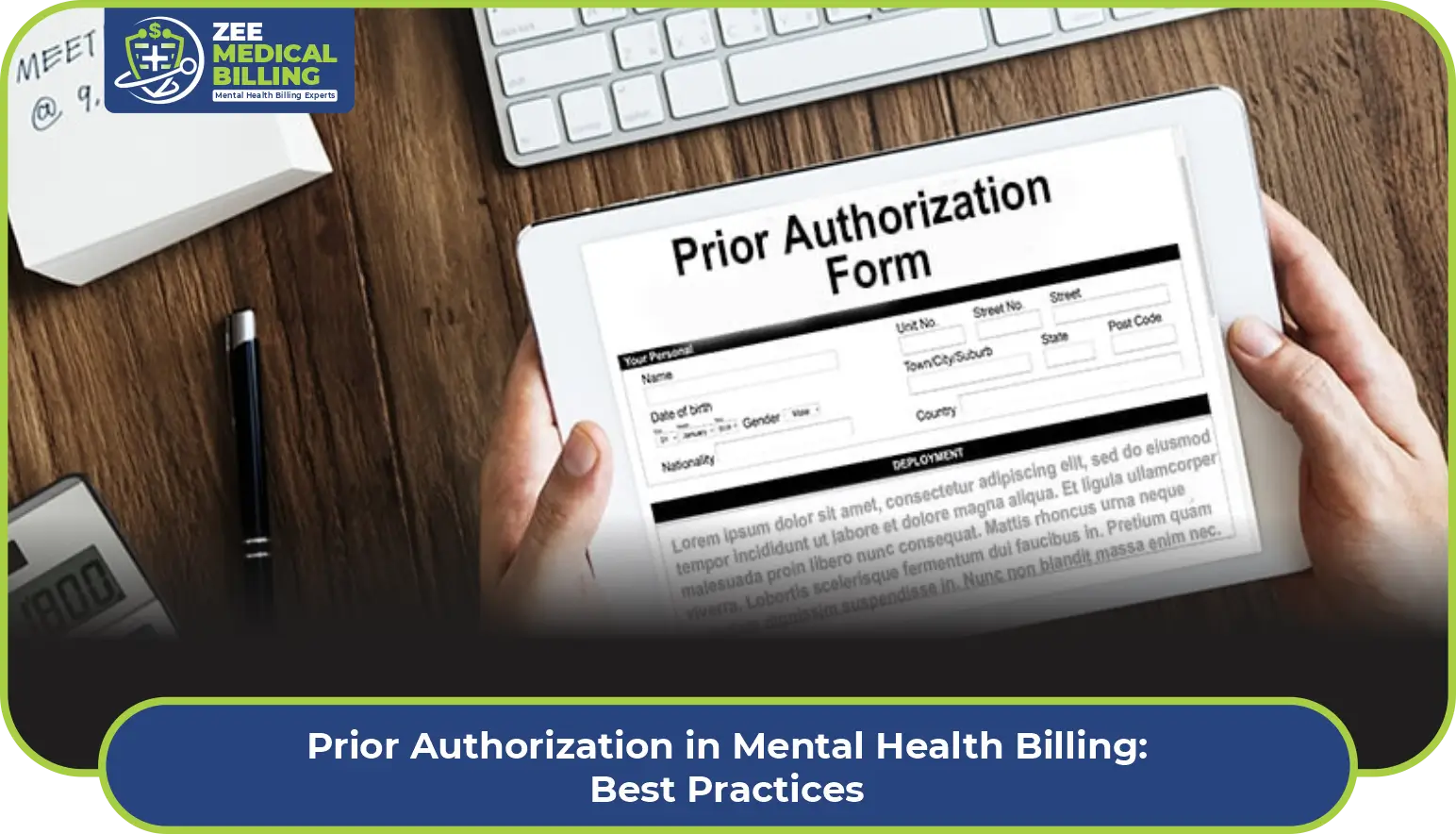
Insurance pre-authorization mental health requirements often apply to initial evaluations and ongoing treatment sessions. The process involves submitting detailed treatment plans, justifying medical necessity, and tracking approved session limits.
Managing Authorization Timelines
Failure to obtain proper authorization results in claim denials. Our upfront assistance services manage authorization tracking and renewal to ensure uninterrupted reimbursement.
Payer-Specific Variations
Each insurance company maintains unique authorization requirements including different forms, varying approval timeframes, distinct session limits, and specific continuation requirements. This complexity overwhelms practices without dedicated resources.
Addressing Psychiatry Billing Challenges

Medication Management Combined With Therapy
Complex Code Combinations
Psychiatry billing challenges intensify when combining psychotherapy with medication evaluation. Code 90863 covers pharmacologic management with psychotherapy, but documentation must clearly delineate both components.
Maximizing Legitimate Reimbursement
Many psychiatrists unknowingly underbill by not capturing all compensable services. Our mental health billing services ensure proper code selection that maximizes legitimate reimbursement while maintaining compliance.
Modifier Usage for Combined Services
When providing therapy alongside evaluation and management services, proper modifier usage indicates distinct services. Incorrect modifier application results in claim denials or bundling that reduces reimbursement.
Telehealth Mental Health Billing
Virtual Service Coding
Place of Service and Modifiers
Telehealth expansion introduced additional complications including state-specific requirements, appropriate place of service codes, required modifiers for telehealth services, and payer-specific policies that vary significantly.
Reimbursement Parity Considerations
While many payers now reimburse telehealth at parity with in-person services, policies vary. Our front office management services stay current with evolving regulations.
Optimizing Behavioral Health Reimbursement
Front-End Revenue Cycle Processes
Eligibility Verification Essentials
Behavioral health reimbursement improvement begins with robust verification. Our eligibility verification services confirm active coverage, mental health benefit details, copay amounts, deductible status, and authorization requirements before each appointment.
Preventing Patient Bad Debt
Real-time verification enables transparent communication about financial responsibility, reducing surprise bills. Practices implementing comprehensive verification typically reduce bad debt by 30-40%.
Clean Claim Submission
Pre-Submission Quality Checks
Clean claims require accurate therapy billing and coding, complete documentation, proper modifier usage, and payer-specific compliance. Our team reviews claims before submission, identifying potential issues when correction is simple.
Denial Management Strategies
Effective denial management includes rapid identification and analysis, correcting errors, timely resubmission within payer deadlines, and pattern analysis to prevent future denials.
Comprehensive Revenue Cycle Management
Revenue cycle management addresses every touchpoint from scheduling through final payment including patient registration, eligibility verification, authorization tracking, accurate charge capture, proper coding review, and patient billing and collections.
Documentation Standards for Mental Health Services
Essential Note Components
Required Documentation Elements
Every therapy note supporting therapy billing and coding should include patient identification, precise session times, presenting problem, specific interventions provided, patient response, measurable progress, and treatment plan with provider signature.
Demonstrating Medical Necessity
Documentation must clearly demonstrate why services were medically necessary. Insufficient documentation represents the leading cause of mental health claim denials following the standard “if it wasn’t documented, it wasn’t done.”
Treatment Plan Requirements
Creating Effective Treatment Plans
Most payers require formal treatment plans for ongoing authorization. Effective plans include clear, measurable goals aligned with diagnosis, specific therapeutic interventions, anticipated duration and frequency, and progress monitoring methods.
Update Frequency Standards
Treatment plans require regular updates, typically every 3-6 months, demonstrating either progress toward goals or justification for continued treatment despite limited progress.
Insurance Credentialing Essentials
The Credentialing Process
Timeline and Requirements
Insurance credentialing services establish reimbursement foundation. The process takes 90-180 days and requires license verification, education confirmation, malpractice insurance documentation, and background checks.
Ongoing Maintenance
Credentialing requires continuous maintenance including re-credentialing every 2-3 years, license renewal updates, and practice change notifications. Failure to maintain current credentialing results in claim denials.
Strategic Network Participation
Credentialing decisions impact practice revenue significantly. Considerations include patient population payer mix, reimbursement rates versus administrative burden, and network adequacy in your area.
Payer-Specific Policy Navigation
Commercial Insurance Requirements
Understanding Policy Variations
Commercial payers each maintain unique policies for mental health services. Requirements vary regarding authorization necessity, acceptable CPT codes for therapists, documentation requirements, telehealth policies, and out-of-network rates.
Medicare and Medicaid Complexities
Government Payer Challenges
Government payers introduce additional complexity with specific documentation requirements beyond commercial standards, different authorization processes, more restrictive coverage limitations, and lower reimbursement rates requiring careful cost management.
Technology Solutions for Billing Success
Practice Management Systems
Essential Software Features
Modern software designed for mental health provides integrated scheduling and billing, electronic claim submission, authorization tracking, telehealth integration, and patient portals. However, technology must be properly configured with current fee schedules.
Electronic Health Record Optimization
Selecting Mental Health-Specific EHR
EHR selection requires consideration of therapy-specific needs including customizable note templates, treatment plan builders, outcome measurement tools, seamless practice management integration, and documentation requirement compliance.
The Value of Specialized Mental Health Billing Services
Why Specialization Matters
Beyond General Medical Billing
Mental health billing services require specialization that general companies lack. The nuances of therapy billing and coding, complex authorization requirements, and payer-specific policies demand dedicated focus. At ZEE Medical Billing, our mental health specialists understand unique challenges therapists face.
Measurable Performance Improvements
Practices partnering with specialized services typically experience denial rates below 5%, collection increases of 15-25%, reduced accounts receivable days, eliminated internal billing costs, and freedom to focus on clinical care.
Comprehensive Service Offerings
End-to-End Revenue Cycle Support
Our approach addresses complete revenue cycle including front office management, eligibility verification, upfront assistance with authorizations, expert coding and claim submission, denial management, patient billing, and regular billing audits.
Proven Results for Therapy Practices
Learn more about cash flow improvements in our article on mental health billing services for practices.
Conclusion: Your Path to Financial Health
Achieving consistent, optimal reimbursement for therapy services requires systematic approaches addressing all aspects of mental health billing services. The complexity continues growing as payers introduce new requirements and documentation standards. Professional mental health billing services from ZEE Medical Billing provide specialized knowledge, comprehensive processes, and dedicated support that transform practice finances.
Download Our Mental Health Billing Checklist to assess your current practices and identify improvement opportunities. Contact ZEE Medical Billing today to discover how our specialized services optimize your behavioral health reimbursement and support your practice’s financial health.
FAQs
1. What are the most commonly used CPT codes for therapists? The most common CPT codes for therapists include 90834 (45-minute therapy), 90837 (60-minute therapy), 90791 (diagnostic evaluation), and 90847 (family therapy).
2. How can I reduce claim denials for mental health services? Reduce denials through eligibility verification, obtaining authorizations, accurate coding, and comprehensive documentation. Professional services typically reduce denials to below 5%.
3. What documentation is required for mental health billing? Documentation must include session times, presenting problems, interventions, patient response, progress toward goals, and treatment plan updates demonstrating medical necessity.
4. How long does insurance credentialing take for therapists? Insurance credentialing typically takes 90-180 days. Start before opening your practice to prevent cash-only limitations during initial months.
5. Should I outsource my mental health billing? Most therapy practices benefit from specialized mental health billing services, achieving 15-25% higher collections while reducing administrative burden and provider burnout.
Follow Us
- Instagram: @zee_medical_billing
- Facebook: ZeeMedicalBilling
- YouTube: Zee Medical Billing Channel
- Twitter/X: @BillingZee
- LinkedIn: Zee Medical Billing Company