
Mental health billing runs on a different set of rules than general medical billing, and practices that treat it the same way usually end up with more denials than they expect. Time-based psychotherapy codes, session limits, supervisory billing for associate-level clinicians, and credentialing across a wide range of license types (LCSW, LPC, LMFT, psychologists, psychiatrists, PMHNPs all add complexity that a general billing team may not be built for.
That is why so many practices, from solo therapists to multi-location behavioral health groups, look specifically for billing partners who understand this niche.
This guide explains what makes mental health billing different, what to look for in a partner, and walks through 10 well-known companies and platforms serving the U.S. behavioral health space in 2026.
Why Mental Health Billing Is Different From General Medical Billing
A few structural differences set behavioral health billing apart:
- Psychotherapy codes (90832, 90834, 90837, 90846, 90847) are time-based, and even small documentation gaps around session length can trigger denials.
- Many payers cap the number of covered sessions per year, requiring ongoing benefit tracking.
- Supervisory or incident-to billing rules for associate-level clinicians vary significantly by payer and state.
- Credentialing is more complex, since practices often employ a mix of license types, each with different payer enrollment requirements.
- Prior authorization is more common for higher levels of care, such as intensive outpatient or partial hospitalization programs.
- Behavioral health carve-outs mean some patients’ mental health benefits are managed by a completely separate payer from their medical coverage.
Also Read: Top 8 Medical Practice Management Software
What to Look For in a Mental Health Billing Partner
Before comparing specific companies, a few evaluation criteria matter most:
- Direct experience with psychotherapy and psychiatric CPT codes.
- Credentialing support across multiple license types.
- Familiarity with behavioral health carve-outs and separate mental health payers.
- Integration with common behavioral health EHRs.
- Transparent reporting on denials, session utilization, and collections.
- Clear, predictable pricing without vague or hidden fees.
- HIPAA-compliant workflows built around therapy note sensitivity.
Top 10 Mental Health Billing Companies in the USA
The list below focuses specifically on companies that provide mental health billing as an outsourced service, not software platforms or EHRs. That distinction matters, and we explain why right after the list.
1. Zee Medical Billing LLC (ZMB)
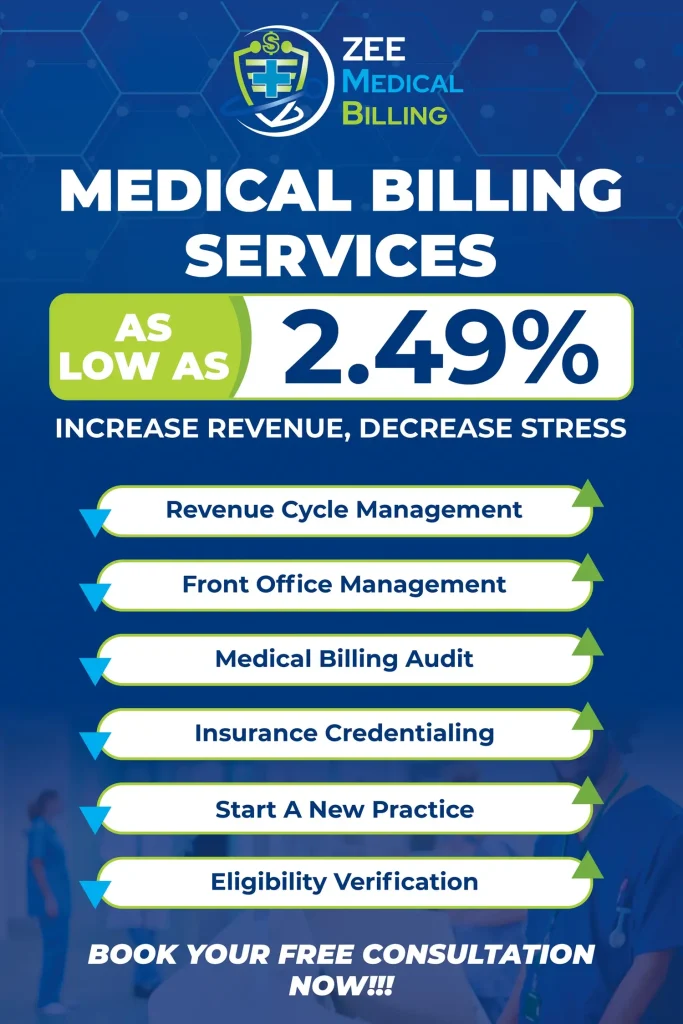
Zee Medical Billing LLC, referenced as ZMB, is a nationwide medical billing and revenue cycle management company with specialty-aware support for behavioral health practices, alongside primary care, cardiology, and other specialties. It earns the top spot for its full-service approach to mental health billing specifically, including claim submission, eligibility verification, credentialing support across license types, denial management, and A/R follow-up.
What practices tend to value:
- Dedicated account teams that understand psychotherapy time-based coding and behavioral health carve-outs.
- Transparent reporting on denial trends and collections.
- HIPAA-aware workflows suited to the sensitivity of behavioral health documentation.
- Support across all 50 states for solo therapists through multi-location group practices.
2. TheraThink
TheraThink is a billing service built specifically around mental health and psychotherapy practices. Founded in 2014, it focuses exclusively on behavioral health claims, credentialing, and insurance verification, which appeals to solo and small-group therapy practices that want a partner working only in this niche.
3. Cascade Therapy Billing
Cascade Therapy Billing is a dedicated mental health billing company based in Washington State. It handles electronic claims processing, daily submissions, denial and underpayment management, payment posting, and patient billing for therapists, psychiatrists, and psychologists.
4. Resilience Billing and Financial
Resilience Billing is a specialized mental health billing company based in northern Illinois, founded in 2019. It provides full-scale revenue cycle management for psychotherapists and psychiatric practices, from solo practitioners to larger outpatient groups.
5. NCDS Medical Billing Solutions
NCDS is a long-established, family-owned medical billing company based in Ohio, operating since the 1980s. It offers billing, credentialing, and revenue cycle management across multiple specialties, including a dedicated mental and behavioral health division.
6. Practolytics
Practolytics is a revenue cycle management company with over 20 years in the industry, serving practices across more than two dozen specialties, including behavioral health and psychiatry. Its services include billing, coding, credentialing, and eligibility verification.
7. Medical Billers and Coders (MBC)
Medical Billers and Coders is a well-established, large-scale medical billing company offering specialty-specific billing divisions across the country, including behavioral health billing built around AAPC-certified coders and payer-specific compliance workflows.
8. iRCM
iRCM is a revenue cycle management company offering behavioral and mental health billing services, including authorizations, claims processing, and denial management, alongside services across several other medical specialties.
9. MediBill RCM LLC
MediBill RCM provides medical billing and revenue cycle management services with specific behavioral health billing offerings, including support for Medicaid, telehealth, and compliance-heavy mental health practices.
10. AnnexMed
AnnexMed is a technology-driven revenue cycle management company offering billing services across multiple specialties, including a focus on behavioral and mental health billing accuracy and administrative efficiency.
Quick Comparison of the 10 Companies
| Company | Often Best For | Notable Strength |
| Zee Medical Billing (ZMB) | Solo to multi-location behavioral health practices nationwide | Full-service billing with credentialing across license types |
| TheraThink | Solo and small therapy practices | Billing service built exclusively for mental health since 2014 |
| Cascade Therapy Billing | Therapists and psychiatric practices | Dedicated behavioral health claims and denial management |
| Resilience Billing | Solo to mid-size outpatient groups | Performance-based pricing, psychiatric specialization |
| NCDS Medical Billing Solutions | Practices wanting an established, long-tenured partner | Multi-decade track record, multi-specialty experience |
| Practolytics | Multi-specialty and larger practices | 20+ years, broad specialty coverage including behavioral health |
| Medical Billers and Coders (MBC) | Practices wanting a large, established billing company | AAPC-certified coders, broad specialty divisions |
| iRCM | Practices needing authorizations and denial-heavy support | Strong authorization and denial management track record |
| MediBill RCM LLC | Practices needing state-specific behavioral health support | Medicaid and telehealth-focused behavioral health billing |
| AnnexMed | Practices wanting technology-driven billing workflows | Emphasis on accuracy through billing technology |
What Is a Billing Tool vs a Billing Company?
This distinction is worth explaining directly, since the two get confused often. A billing tool (sometimes called billing software) is a program or platform, often bundled with an EHR, that gives a practice the tools to enter charges, submit claims, and track payments themselves.
The practice’s own staff still does the work of running the billing. A billing company, by contrast, is a service provider whose staff actually performs the billing on the practice’s behalf, from claim submission through denial follow-up and collections.
| Factor | Billing Tool (Software) | Billing Company (Service) |
| Who does the work | The practice’s own staff, using the software | The billing company’s staff, on the practice’s behalf |
| What you’re buying | A platform or license | An outsourced service |
| Staffing needed in-house | Yes, someone still runs billing day to day | Minimal, the company handles it |
| Typical pricing | Monthly software subscription | Percentage of collections or flat service fee |
| Example use case | A practice with its own trained billing staff | A practice that wants billing fully handled externally |
All 10 companies on this list are billing companies, meaning they perform the billing work as a service rather than simply providing software for a practice to do it themselves.
What Percentage Do Mental Health Billing Companies Typically Charge?
Pricing varies by company and service scope, but a few common models show up across the industry:
- Percentage of collections: commonly in the range of about 4 to 10 percent of what is actually collected, though this varies by practice size, claim volume, and service scope.
- Flat monthly fee: less common for full-service billing, but used by some smaller operations or specific service tiers.
- Per-claim fee: a fixed amount charged for each claim processed, regardless of the amount collected.
Always request pricing in writing, including what is and is not included, before comparing options.
Also Read: 9 Best Medical Billing Software in the USA
Supervisory Billing: A Common Mental Health Billing Question
A frequent question from group practices: can services provided by an associate-level clinician (working toward full licensure) be billed under a supervising provider? The general answer is that many payers do allow some form of supervisory or incident-to billing for behavioral health services, but the rules vary significantly by payer, by state licensing board, and by the specific service provided.
Some payers require the supervisor to be actively involved in the session, others have documentation requirements specific to supervision, and some do not allow it at all for certain license types. This is an area where payer-specific verification matters more than a general rule of thumb, and it is worth confirming directly with each payer before billing under a supervisory arrangement.
Red Flags to Watch For When Choosing a Billing Partner
A few warning signs worth taking seriously during evaluation:
- Vague or inaccessible reporting on claim status and denials.
- Guarantees of approval or reimbursement amounts that no legitimate billing company can promise.
- Reluctance to explain exactly how claims are verified before submission.
- No clear audit trail showing the work actually performed on each claim.
- Pricing that is not disclosed clearly in writing before signing.
At Zee Medical Billing LLC, we often see practices switch billing partners specifically because a prior vendor could not explain denial patterns or provide clear reporting, which usually traces back to a lack of transparency rather than a technical failure.
FAQs
What makes mental health billing different from general medical billing?
Mental health billing involves time-based psychotherapy codes, payer-specific session limits, behavioral health carve-outs where mental health benefits are managed separately from medical benefits, and credentialing across a wider range of license types than many other specialties. Supervisory billing rules for associate-level clinicians add another layer of complexity not commonly seen in general medical billing. These factors mean a billing partner needs specific behavioral health experience, not just general medical billing knowledge, to avoid preventable denials.
What percentage do mental health billing companies typically charge?
Most dedicated billing services charge a percentage of collections, commonly in the range of about 4 to 10 percent, though this varies based on practice size, claim volume, and the scope of services included. Some companies use a flat monthly fee or per-claim pricing instead, particularly for smaller practices or specific service tiers. Always request full pricing details in writing, including what services are covered, before comparing options.
Can billing companies handle supervisory or incident-to billing for associate-level therapists?
Many billing companies can support supervisory billing arrangements, but the underlying payer rules vary significantly by payer, state, and license type. Some payers require the supervising clinician to be actively involved in the session, others have specific documentation requirements, and some do not permit this arrangement for certain services at all. A knowledgeable billing partner will verify the specific payer’s rules before submitting claims under a supervisory arrangement rather than applying a blanket assumption.
What is the difference between a billing company and a billing tool?
A billing tool, often bundled with an EHR, is software that gives a practice the ability to enter charges, submit claims, and track payments using its own staff. A billing company is a service provider whose staff performs that work on the practice’s behalf, from claim submission through denial follow-up and collections. The practical difference is who is doing the day-to-day billing work: your own team using a platform, or an outside team doing it for you. All companies listed in this guide are billing companies, meaning they perform the work directly rather than just providing software.
How do I choose the right mental health billing partner for my practice?
Start by identifying your practice’s specific needs: solo practice versus group, existing EHR system, license types on staff, and whether you need credentialing help or just claims support. Look for direct behavioral health experience, transparent reporting, clear pricing in writing, and familiarity with your state’s payer landscape. Ask for references from similarly sized behavioral health practices, and be cautious of any partner unwilling to explain exactly how they verify and track claims.
Conclusion
Mental health billing requires specialized knowledge that general medical billing does not always provide, from time-based psychotherapy codes to supervisory billing rules and behavioral health carve-outs. Zee Medical Billing LLC brings a full-service, specialty-aware approach to this list, alongside dedicated behavioral health billing companies like TheraThink, Cascade Therapy Billing, Resilience Billing, NCDS Medical Billing Solutions, Practolytics, Medical Billers and Coders, iRCM, MediBill RCM, and AnnexMed, each with its own track record serving behavioral health practices across the country.
Key takeaways:
- Mental health billing has structural differences that require specialty-specific experience.
- Know the difference between a billing tool (software your staff uses) and a billing company (a service that does the work for you).
- Confirm pricing models and get them in writing before signing.
- Verify supervisory billing rules payer by payer rather than assuming a universal policy.
- Watch for transparency red flags during evaluation, not just price.
The right mental health billing partner does more than submit claims. It understands the specific rules that make behavioral health billing genuinely different from general medical billing.
.
Follow Us
- Google Map: Zee Medical Billing
- Instagram: @zee_medical_billing
- Facebook: ZeeMedicalBilling
- YouTube: Zee Medical Billing Channel
- Twitter/X: @BillingZee
- LinkedIn: Zee Medical Billing Company
- Pinterest: Zeemedicalbillingllc